

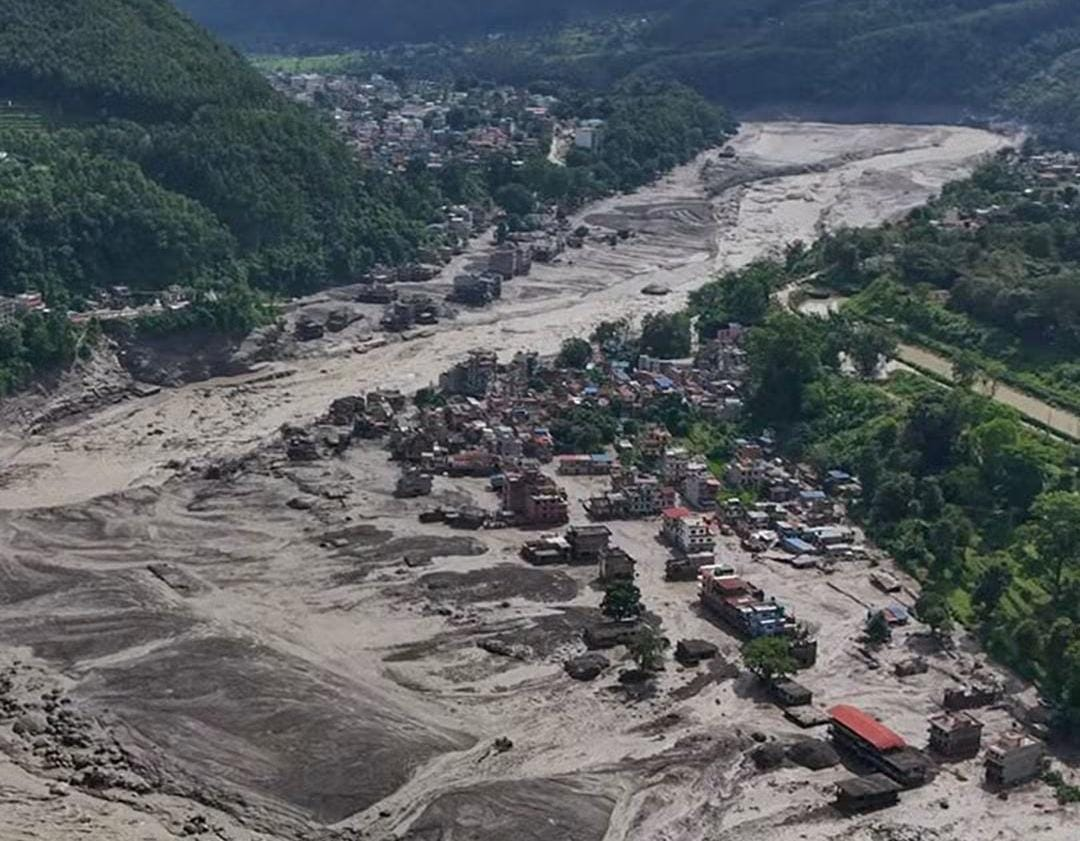
Flash floods and mudslides triggered by a surge along the Bhote Koshi River have devastated parts of Nepal, sweeping away homes, roads, bridges and vehicles as rescue teams continue searching for missing people.
The death toll from devastating flash floods and mudslides in Nepal has risen to 469, according to figures released by Nepal Police on the morning of August 28, as rescue teams continue searching for more than 1,400 people reported missing or out of contact.
The disaster began on August 26 along the Bhote Koshi River near the Nepal-Tibet border, unleashing huge volumes of water, mud, rocks and debris downstream.
The powerful surge caused widespread destruction across several districts, sweeping away homes, roads, bridges, vehicles and parts of hydropower infrastructure.
Police said bodies have so far been recovered in eight districts, with Chitwan recording the highest number of deaths at 178, followed by East Nawalparasi with 110.
Authorities have warned that the scale of the disaster could become clearer in the coming days as rescue workers reach isolated communities and continue efforts to identify victims.
More than 1,400 still missing
More than 1,400 people across Nepal and Tibet were still reported missing or out of contact as of the latest update.
Nepal Flood Disaster: Death Toll Rises to 165 as More Than 1,300 Remain Missing
Officials, however, said the figure remains fluid because authorities are still verifying names, accounting for travellers and determining the whereabouts of people who may have been stranded in remote areas or cut off from communication.
Rescue teams have been working in difficult conditions, with damaged roads and bridges hampering access to some of the worst-hit communities.
The floods have also disrupted transportation and communications in several areas, complicating efforts to locate survivors and recover bodies.
Possible Himalayan avalanche behind disaster
Scientists believe the flooding may have been triggered by an ice and rock avalanche in the upper Himalayan region.
According to the emerging assessment, the avalanche may have blocked a waterway, creating a temporary natural barrier. The barrier is believed to have subsequently collapsed, releasing a massive volume of water downstream and producing the devastating flash flood.
Authorities are now monitoring temporary lakes and rivers that may have been blocked by debris, amid concerns that further collapses could trigger additional flooding.
The situation remains particularly sensitive in mountainous areas, where unstable slopes and accumulated debris could create new hazards for residents and rescue personnel.
Regional impact
The disaster has also prompted authorities to check on foreign nationals who may have been in affected areas.
Thai authorities said there were no reports of Thai nationals being killed or injured in the disaster as of the latest update, following checks by the Thai Embassy in Kathmandu.
Meanwhile, rescue and recovery operations remain underway as Nepal confronts one of its most destructive recent flood disasters.
Authorities are expected to provide further updates on the death toll, missing persons and damage as search teams gain access to more affected areas.
Leave a comment
Your email address will not be published. Required fields are marked *