

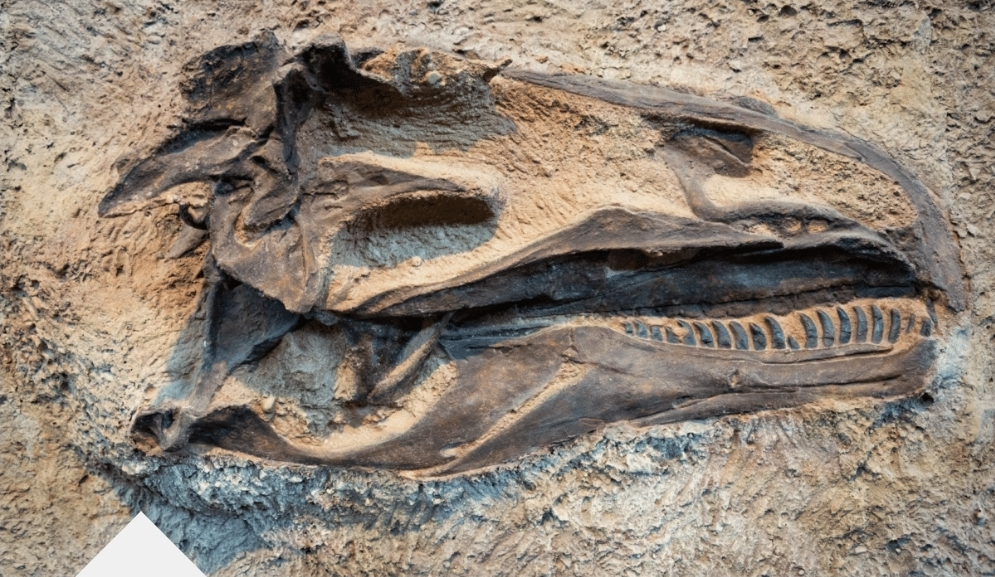
Newly identified Jirahgorgon ceto challenges long-held beliefs, showing complex land predators evolved far earlier than previously thought
A groundbreaking fossil discovery in South Africa is forcing scientists to rethink the evolution of early land predators, after researchers identified a massive 260-million-year-old carnivore that appears far more advanced than expected for its time.
The species, named Jirahgorgon ceto, was uncovered in the fossil-rich Karoo Basin and is now described in a new study published in The Anatomical Record. It belongs to a group of ancient mammal relatives known as gorgonopsians—among the earliest apex predators to roam Earth.
What has stunned scientists is not just the creature’s size, but its level of anatomical sophistication. For decades, experts believed early gorgonopsians started small and gradually evolved into larger, more specialized hunters later in the Permian period. However, Jirahgorgon ceto appears to have developed these advanced traits much earlier, disrupting that long-standing evolutionary model.
Lead researcher Dr. Zanildo Macungo explained that the predator lived around 260 million years ago, in a harsh, dry world that formed part of the supercontinent Pangea. Despite this early timeframe, the fossil reveals features typically associated with later, more evolved species.
The remarkably preserved skull and jaw allowed scientists to carry out detailed internal analysis using advanced 3D imaging technology in France. The scans exposed structural adaptations for powerful biting, including a skull shape and bone arrangement similar to later large predators.
These findings suggest that Jirahgorgon was already a dominant hunter in its ecosystem, capable of tackling sizable prey—far earlier than scientists had assumed such ecological roles existed.
Beyond the anatomy, the discovery carries broader implications for how evolution is understood. Rather than following a simple, linear path from small to large predators, the evidence points to a more complex process, where different species independently developed similar traits at different times.
Researchers also identified a new family group, Phorcyidae, to classify the species and its relatives—further highlighting previously unrecognized diversity among early carnivores.
The discovery is reshaping views of prehistoric ecosystems leading up to the Permian–Triassic extinction event, the most devastating mass extinction in Earth’s history. If large, specialized predators were already established, it suggests these ancient ecosystems were far more intricate and competitive than once believed.
Scientists say the find opens the door to further discoveries in the Karoo Basin, with ongoing research aimed at determining whether Jirahgorgon ceto was widespread or part of a unique evolutionary branch.
For now, the fossil stands as a powerful reminder that Earth’s evolutionary history is far less predictable—and far more dynamic—than previously imagined.
Leave a comment
Your email address will not be published. Required fields are marked *