

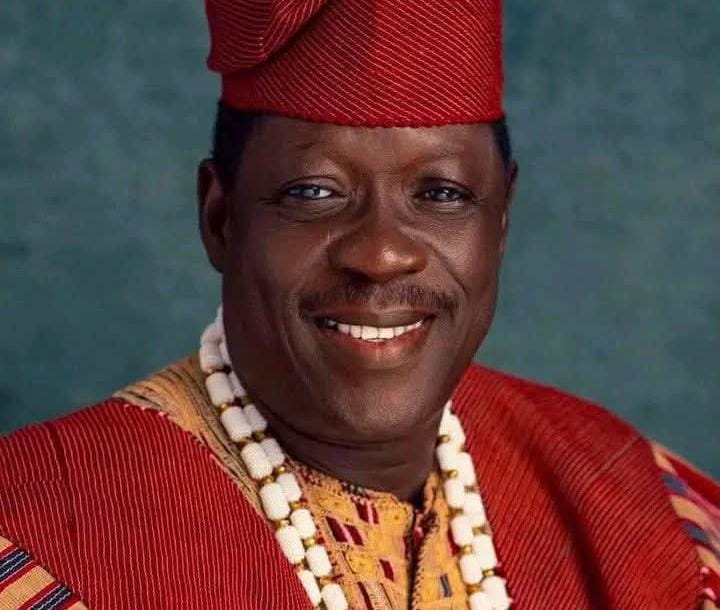
The celebrated Yoruba actor, producer and director spent more than four decades in the entertainment industry, leaving behind a rich legacy of memorable characters and films.
Veteran Nollywood actor, Taiwo Hassan, popularly known as Ogogo, has died at the age of 66, throwing the Nigerian entertainment industry into mourning.
Hassan died on Sunday, August 23, 2026, after a prolonged battle with cancer.
The actor’s death was confirmed by his daughter, Kira Taiwo, who announced the development in an emotional live video, repeatedly saying, “My daddy is dead.”
The confirmation came just five days after the family dismissed earlier reports of his death as false.
For more than four decades, Ogogo remained a prominent figure in Yoruba-language cinema, successfully transitioning from the early theatre and home-video era into contemporary Nigerian film and streaming productions.
Veteran Nollywood Actor Ogogo Dies at 66, to Be Buried Monday in Ilaro
https://dailyobserver.ng/veteran-nollywood-actor-ogogo-dies-at-66-to-be-buried-monday-in-ilaro
Here are 15 things to know about the late actor and his career:
1. He was born in Ogun State
Taiwo Hassan was born on October 31, 1959, in Ilaro, Ogun State.
He spent his formative years in the town before moving to Lagos, where he pursued his education, learnt a trade and eventually established himself in the entertainment industry.
2. Ogogo became bigger than his real name
Although his birth name was Taiwo Hassan, millions of Nigerians knew him simply as Ogogo.
The nickname became closely associated with his screen identity and his performances in Yoruba films, particularly stories centred on family, tradition, morality and social struggles.
3. He worked as an automobile mechanic
Before becoming a full-time actor, Hassan trained and worked as an automobile mechanic.
He later joined the Lagos State Water Corporation, where he reportedly spent about 13 years while simultaneously developing his passion for acting.
4. He started acting in 1981
Ogogo began his acting career in 1981, while he was still working as a mechanic.
He learnt the craft largely through practical theatre experience and gradually established himself within the growing Yoruba theatre and film community.
His career would eventually span more than four decades.
5. He left government service in 1994
After years of combining government employment with acting, Hassan resigned from the Lagos State Water Corporation in 1994.
He subsequently devoted himself fully to the entertainment industry, at a time when Nigeria's home-video industry was beginning to expand rapidly.
6. He was more than an actor
Ogogo's contribution to Nollywood extended beyond acting.
He also worked as a producer, director and screenwriter, contributing to productions that explored Yoruba culture, family relationships, leadership, tradition, social responsibility and moral questions.
7. He appeared in several memorable films
Throughout his career, Ogogo featured in numerous productions, including Owo Blow, Agbeletu, Omo Ghetto, Omin, Tenant of the House, Bank Alert and Aníkúlápó.
His ability to portray authoritative, traditional and dramatic characters made him a recognisable face across generations of Nigerian movie audiences.
8. Some of his early works included writing and producing
Ogogo's early filmography showed that his creative contribution was not limited to appearing in front of the camera.
In the mid-1990s, he featured in and contributed behind the scenes to productions including Agbelebu (1995), Dr Brown (1995), where he was also credited as a writer, and Ekun-Ayo (Tears of Joy) (1996), where he was credited as writer and producer.
He also appeared as Wole Owolabi in Owo Blow Parts 2 and 3 in 1996.
9. He played a wide range of characters
Over the years, Hassan demonstrated his versatility by taking on different roles.
His credits included Adesina in Omin (2008), Yomi in Elewon (2009), a D.P.O. in Omo Ghetto (2010), Hon. Kasali in Tenant of the House (2019), Alhaji in Amerah (2021) and Grandpa in Bank Alert (2023).
10. He remained active well into the 2020s
Unlike many actors from his generation who gradually withdrew from the screen, Ogogo continued to accept roles well into the 2020s.
Among his later credits was IGE – The Unlikely Oil Merchant (2023), where he played Olalere.
He also returned as Alaafin Ademuyiwa in Aníkúlápó: Rise of the Spectre in 2024.
11. ‘Aníkúlápó’ introduced him to a younger audience
Ogogo reached an even broader audience with his portrayal of Alaafin Ademuyiwa in Kunle Afolayan's 2022 Netflix film, Aníkúlápó.
The critically discussed production helped expose his talent to a new generation of Nigerian and international viewers.
12. His performance in ‘Aníkúlápó’ earned an award nomination
His performance in Aníkúlápó earned him a nomination for Best Supporting Actor at the 2023 Africa Magic Viewers’ Choice Awards (AMVCA).
The film itself also received multiple nominations at the prestigious awards.
13. He spoke about his unusual family history
Hassan once revealed that his mother gave birth to four sets of twins and that he was the only surviving child.
The actor also spoke publicly about fatherhood and parental responsibility, stressing the importance of men accepting their responsibilities towards their children.
14. His final days prompted concern and support from Nollywood
In the days leading up to his death, his daughters, Kira and Haleemah, disclosed that their father was battling stage-four cancer.
The family appealed for medical assistance rather than financial donations as his condition deteriorated.
Members of the Nigerian entertainment industry also rallied around the veteran actor, with colleagues holding a special prayer session for him as concerns over his health intensified.
15. His career crossed several generations of Yoruba cinema
Perhaps one of Ogogo's greatest legacies is the longevity of his career.
From the theatre and early home-video era to modern cinema and streaming platforms, he remained relevant for more than four decades.
He appeared in stories that reflected Yoruba culture, traditional institutions, family relationships, social struggles and moral values.
For generations of movie lovers, Ogogo was more than a familiar face on screen. He was one of the actors who helped shape and preserve the identity of Yoruba-language cinema.
His death marks the end of a remarkable chapter in Nollywood, but his performances and contributions to the industry are expected to remain part of Nigeria's cinematic heritage for years to come.
Leave a comment
Your email address will not be published. Required fields are marked *