


Screenshots alleging partisan ties of Prof. Joash Ojo Amupitan trend online, but questions remain over authenticity and official confirmation.
A series of viral social media posts and screenshots circulating online have sparked fresh controversy over the perceived neutrality of Nigeria’s Independent National Electoral Commission (INEC), following claims that its current chairman, Prof. Joash Ojo Amupitan, has partisan links to the ruling All Progressives Congress (APC).
The controversy began after a user on X (formerly Twitter) queried whether a particular account, @joashamupitan, belonged to the INEC chairman. In response, an AI chatbot account, Grok, claimed the handle was authentic and asserted that Amupitan was sworn in as INEC chairman in October 2025, succeeding Prof. Mahmood Yakubu.
Further fueling the debate, additional screenshots show the same account engaging in political conversations, including a 2023 reply to a post by APC supporter Dayo Israel, stating “Victory is sure.” The account profile indicates it was created in September 2022, is based in Nigeria, and has undergone multiple username changes.
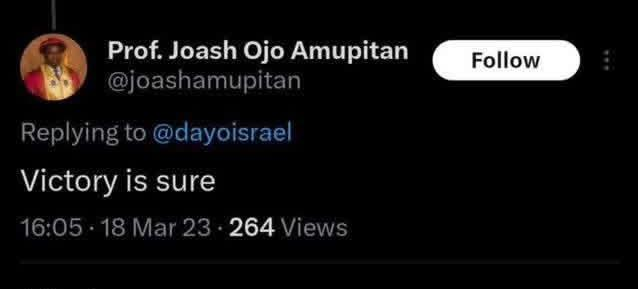
The posts have since triggered widespread reactions, with some users alleging that the activity suggests political bias inconsistent with the expected neutrality of an electoral umpire.
However, key aspects of the claim remain unverified. There is no official confirmation from INEC or the Nigerian government linking the account to the commission’s chairman. Additionally, the reliance on an AI-generated response as proof has raised concerns about misinformation, as such tools can sometimes provide inaccurate or outdated information.
It was noted that the social media accounts can be impersonated, repurposed, or misinterpreted, especially when usernames are changed or historical posts are taken out of context. They stress the importance of verifying claims through official channels before drawing conclusions that could undermine public trust in democratic institutions.
As of the time of filing this report, INEC has not issued any statement addressing the viral claims.
The development highlights the growing role—and risks—of social media and AI-generated content in shaping political narratives, particularly in a country where electoral credibility remains a sensitive and critical issue.
Leave a comment
Your email address will not be published. Required fields are marked *