

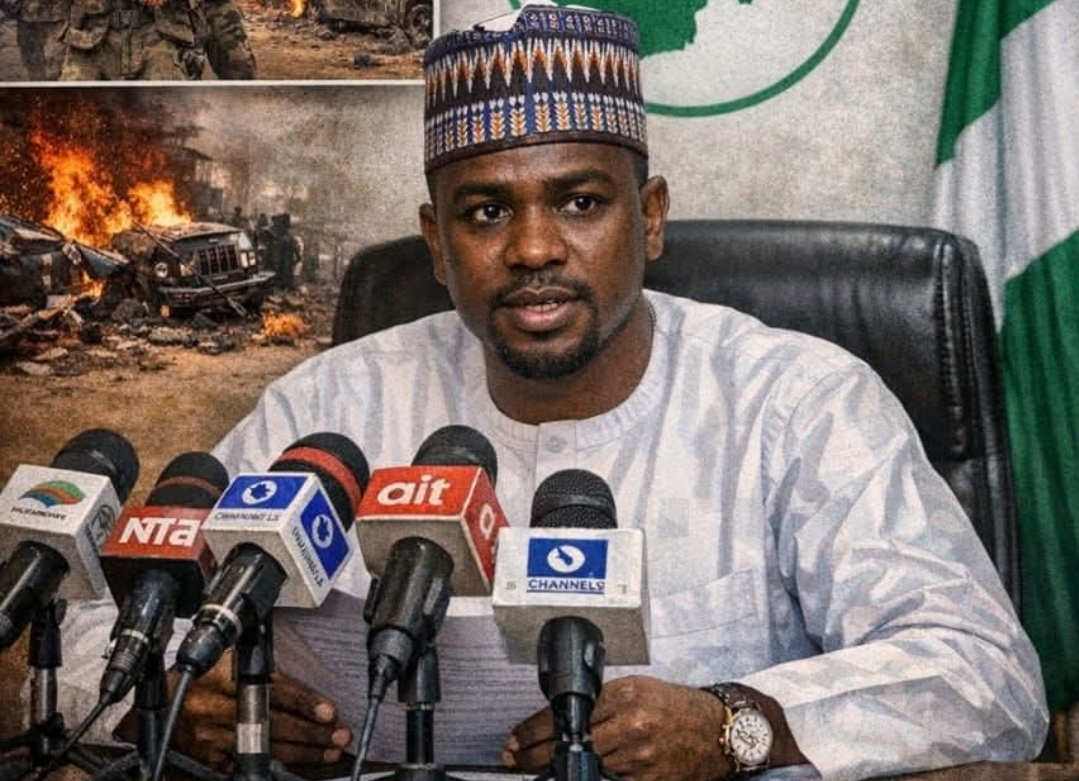
Arewa Youth Assembly claims pattern of election-cycle violence and warns of destabilisation plot; backs security agencies as viral posts expand accusations without evidence
The Arewa Youth Assembly (AYA), a northern youth group, has triggered fresh political tension after accusing elements within Nigeria’s opposition of deliberately fuelling insecurity across parts of the country ahead of the 2027 general elections.
At a press conference in Abuja, the group’s spokesperson, Mohammed Salihu Danlami, said recent waves of violence—including kidnappings, banditry, and arson attacks—should not be viewed as isolated incidents but as part of a recurring pattern linked to election cycles.
He pointed to previous periods of heightened insecurity, including the Boko Haram insurgency escalation between 2011 and 2015, farmer-herder clashes around the 2019 elections, and widespread kidnapping incidents recorded during the 2023 polls, arguing that the repetition “cannot be dismissed as coincidence.”
Danlami alleged that certain actors within opposition circles were “complicit in sponsoring and fuelling insecurity as a strategy to weaken the state and discredit the government,” insisting the group’s position was based on what it described as “conviction backed by intelligence,” though no public evidence was presented at the briefing.
The group warned that if insecurity continues unchecked, it could threaten the credibility, logistics, and overall integrity of the 2027 elections, potentially pushing the country toward a broader constitutional and economic crisis.
While making the allegations, AYA also urged political actors to exercise restraint and avoid exploiting security challenges for partisan gain, calling for issue-based campaigning as the election season approaches.
The group, however, commended the federal government’s security architecture, praising the Office of the National Security Adviser led by Nuhu Ribadu, alongside service chiefs and other security agencies, for what it described as recent gains against armed groups.
Notably, the Arewa Youth Assembly did not name any specific opposition figures in its official statement, instead referring broadly to “elements within the opposition” and “certain political actors.”
However, the development has sparked widespread online controversy, as a viral version of the statement circulating on social media expanded the allegations to include prominent opposition figures such as Peter Obi, Atiku Abubakar, and Rotimi Amaechi—claims not contained in the group’s official remarks.
As of press time, none of the individuals named in the viral posts, nor their political camps, have issued official responses.
Meanwhile, while Nigeria has historically experienced spikes in violence around election periods, linking such trends to coordinated political sponsorship remains highly sensitive and requires strong, verifiable evidence.
For now, the AYA intervention adds to growing pre-election tensions, where insecurity, political accountability, and public trust in institutions continue to dominate national discourse.
Leave a comment
Your email address will not be published. Required fields are marked *