

LSACA clarifies figures as 2018 diagnosed cases—not fresh infections—highlights declining positivity rate and major gains in treatment, prevention
The Lagos State Government has dismissed widespread reports claiming the state recorded 10,430 new HIV infections, describing the figures as misleading and based on a misinterpretation of old data.
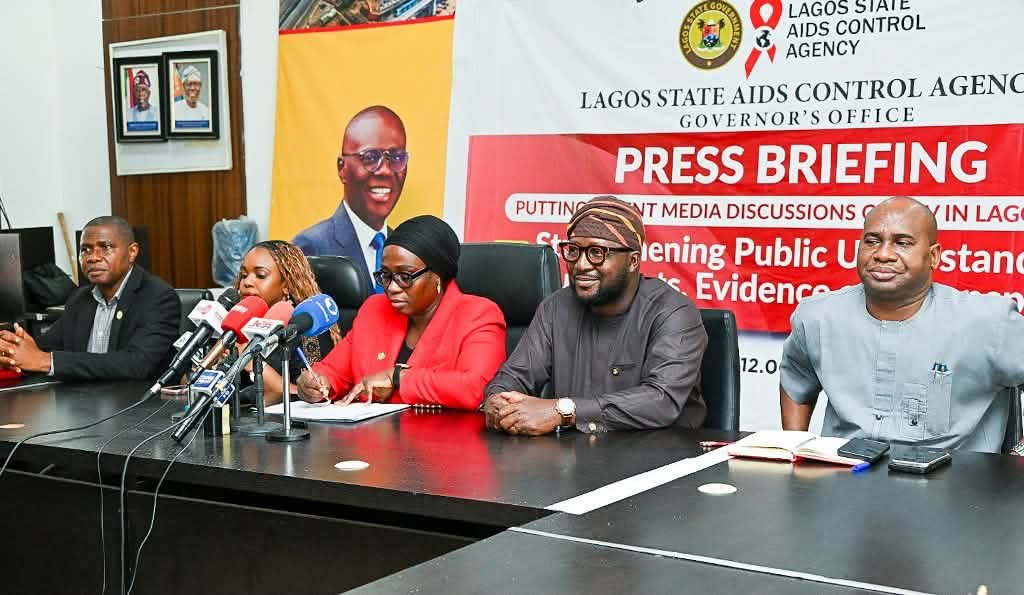
At a press briefing held Thursday at the Bagauda Kaltho Press Centre in Alausa, Ikeja, the Chief Executive Officer of the Lagos State AIDS Control Agency (LSACA), Dr. Folakemi Animashaun, clarified that the widely circulated figure originates from a 2018 survey and represents newly diagnosed HIV-positive cases—not new infections recorded in 2025.
She stressed that Lagos’ HIV response remains robust, data-driven, and firmly on track, urging the public not to panic.
“The figure being circulated refers to individuals who tested positive within the reporting period. These cases may include people who contracted HIV years earlier but were only recently diagnosed,” Animashaun explained.
According to her, the data also captures patients who traveled to Lagos for testing or treatment, as well as referrals from other states—factors that naturally increase the number of diagnosed cases in a major healthcare hub like Lagos.
She drew a clear distinction between “newly diagnosed cases” and “new infections,” noting that the latter is determined through epidemiological modelling and should not be confused with testing outcomes.
“Inaccurate interpretation of public health data can create unnecessary fear, fuel stigma, discourage testing, and ultimately weaken public health interventions,” she warned.
Despite recent concerns, Animashaun said Lagos is making measurable progress toward controlling the HIV epidemic. In 2025 alone, the state conducted 504,800 HIV tests, identifying 11,940 positive cases—a positivity rate of 2.4 percent. This trend improved further in the first quarter of 2026, with 179,229 tests conducted and 3,390 positive cases recorded, reducing the positivity rate to 1.9 percent.
She described the declining positivity rate—despite expanded testing—as a key indicator of improving epidemic control.
The state has also recorded major treatment milestones. As of 2025, 147,904 people were receiving antiretroviral therapy (ART) in Lagos, with 97 percent achieving viral suppression—an outcome widely regarded as critical in reducing transmission and improving quality of life.
Significant progress has also been made in preventing mother-to-child transmission. Early Infant Diagnosis positivity dropped sharply from 5.1 percent in 2020 to 1.5 percent in 2025, reflecting sustained improvements in maternal and child health services.
Animashaun said these achievements underscore Lagos’ position as one of Nigeria’s strongest HIV response systems, driven by expanded access to testing, treatment, and surveillance.
Looking ahead, she revealed that the state has launched a three-month HIV Response Acceleration Plan (July–September 2026), aimed at scaling up testing, strengthening treatment retention, improving service quality, and expanding community-based prevention programmes across all local government areas.
The plan also includes wider deployment of Pre-Exposure Prophylaxis (PrEP), including both oral and long-acting injectable options.
In a landmark move, the Lagos State Government has also begun direct procurement of antiretroviral drugs (ARVs) to guarantee uninterrupted treatment. The first batch is expected to arrive by the end of August 2026, making Lagos the first sub-national government in Nigeria to independently procure HIV treatment medicines.
“This bold step reduces dependence on donor funding and ensures sustainable access to life-saving treatment,” Animashaun said, adding that the state is also exploring local production of HIV commodities in collaboration with global partners such as UNAIDS.
She reassured residents that HIV remains preventable and manageable, emphasizing that early diagnosis and consistent treatment enable people living with HIV to lead long, healthy, and productive lives.
“To every resident of Lagos, there is no cause for panic. Know your status, access available services, rely on verified information, and reject stigma,” she urged.
Also speaking, the Special Adviser to the Governor on Media and Publicity, Gboyega Akosile, said the briefing was necessary to correct misinformation circulating in both traditional and digital media.
He reaffirmed the commitment of Governor Babajide Sanwo-Olu’s administration to sustained investment in healthcare infrastructure and public health programmes, noting that the state had taken proactive steps to maintain HIV services even amid disruptions to foreign assistance.
Akosile called on journalists to prioritise accurate reporting, stressing that responsible communication is vital to maintaining public trust and preventing unnecessary panic.
The Lagos State Government reiterated its commitment to strengthening healthcare systems, enhancing disease surveillance, and ensuring that every resident has access to quality HIV prevention, testing, treatment, and care services.
Leave a comment
Your email address will not be published. Required fields are marked *